Your Office May Stay Dry. Your Business Can Still Stop: Preparing a BCP for Flood Disruption
Last updated: 5 Oct 2026
10 Views
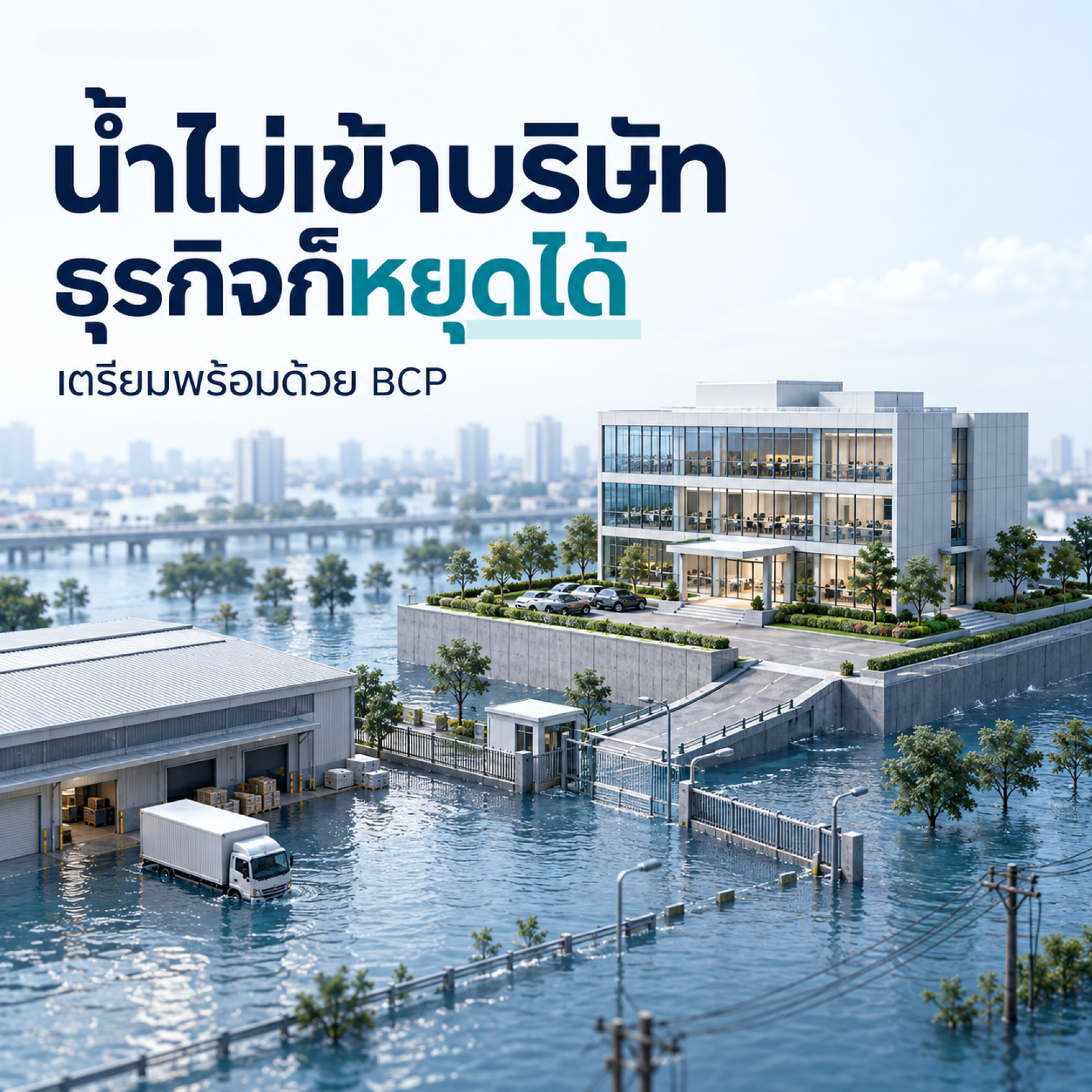
Your Office May Stay Dry. Your Business Can Still Stop: Preparing a BCP for Flood Disruption
“Our premises have never flooded. Do we really need a flood continuity plan?”
If your organisation has used this reasoning to assess its exposure, the flooding in Thailand during late September and early October 2026 provides a timely reason to reconsider.
On 26 September 2026, Thairath reported flooding across several areas of Bangkok, including locations where residents said they had not previously experienced flooding. Past experience alone may therefore be insufficient to establish how safe a location is today.
Meanwhile, FM91 reported Bangkok Metropolitan Administration updates for the morning of 5 October 2026 showing continued flooding along several roads, including sections of Lat Krabang, Chalong Krung, Luang Phaeng and Phahonyothin.
For organisations, the question should extend beyond “Will floodwater enter our premises?” to “How will our business continue if flooding affects our people, transport routes or suppliers?”
What Is a Business Continuity Plan for Flood Disruption?
A Business Continuity Plan (BCP) for flood disruption sets out how an organisation will maintain its critical activities and services when flooding interrupts normal operations.
It identifies responsibilities, activation criteria, recovery objectives, alternative resources and communication arrangements. It addresses both direct flooding of premises and indirect disruption affecting employees, suppliers or transport routes.
1. Your Premises Can Stay Dry While Your Business Stops
Imagine that your office remains fully operational, but key employees cannot reach it, delivery vehicles cannot access your warehouse, or an essential supplier has suspended operations.
Your organisation may suffer no direct flood damage, yet still face delayed deliveries, backlogs, interrupted revenue and declining customer confidence.
Flood risk assessments should therefore cover dependencies both within and beyond your premises:
People: Are employees safe, and can they carry out essential duties?
Premises and equipment: Are offices, factories, warehouses and critical equipment accessible and operational?
Systems and information: Which activities would stop if electricity or internet connectivity failed?
Suppliers and logistics: Can essential materials, products and services still reach your organisation?
Customers: How will you maintain essential services and communicate delivery status?
A dry building does not necessarily mean an operational business.
2. “It Has Never Happened” Should Not Be the Only Reason to Rate a Risk as Low
Historical incident data is valuable, but risk assessments should also reflect current conditions and business operations.
Since your last assessment, have you introduced new delivery routes, opened another warehouse, become more dependent on a single supplier, or relocated critical equipment?
Rather than simply recording “Flooding: Low likelihood”, consider specific disruption scenarios:
If the main access route becomes unusable, can employees and vehicles still reach the site?
If several departments lose staff availability at the same time, who can cover critical responsibilities?
If your primary and backup warehouses are exposed to the same flood event, is the backup genuinely usable?
If a supplier suspends deliveries for several days, how long will available stock support operations?
This moves the assessment from naming a hazard to understanding how that hazard could affect organisational objectives and operations.
3. Why Do You Need a BCP If You Already Manage Risk?
Risk management and business continuity planning work together, but address different parts of preparedness.
Risk management helps organisations identify, assess and address risks. Measures might include improving drainage, moving critical equipment to higher levels or reducing dependence on a single supplier.
A Business Continuity Plan sets out how essential operations will continue when disruption occurs. It establishes who can activate the plan, which activities take priority, what alternatives are available and who needs to be informed.
For example, installing flood barriers around a factory does not resolve every continuity issue. The organisation still needs to determine what to do if employees cannot reach the factory or essential materials cannot be delivered.
This approach aligns with ISO 22301, the international standard for Business Continuity Management Systems, which provides a framework for preparing for, responding to and recovering from disruptive incidents.
4. What Should a Flood BCP Address?
Which Activities Must Continue, and How Quickly Must They Recover?
Start with a Business Impact Analysis (BIA) to understand how the effects of disruption develop over time and to establish recovery priorities.
What would happen if order processing stopped for one day? How much work would accumulate if your warehouse could not dispatch goods for three days? Which activities must resume first to support essential customer needs?
Recovery objectives should reflect the level of impact the organisation can tolerate and the resources it can realistically make available.
When Should the Plan Be Activated?
Waiting until floodwater enters the premises may leave too little time to prepare.
Define staged action criteria, such as relevant official warnings, disruption to critical access routes or confirmation that an essential supplier cannot deliver.
Each stage should specify the responsible person, decision-making authority and required actions. Criteria should be tailored to official alerts and the organisation’s actual operating conditions.
Which Alternatives Are Available?
“Work from home” may not be a sufficient solution. Employees’ homes may also be affected, and some activities require specialist equipment or a physical site.
Suitable alternatives could include another workplace, trained backup personnel, different transport routes, alternative suppliers or temporary prioritisation of essential services.
Check whether these alternatives could be disrupted by the same event affecting your primary arrangements.
Who Needs Information, and How Will It Reach Them?
Employees need clear instructions, management needs reliable information for decisions, and customers need accurate service updates.
The plan should include current contact details, alternative communication channels, message approval responsibilities and update schedules.
It should also address support for affected employees, with personal safety taking priority.
5. A Documented Plan Needs to Be Tested
A written BCP is a starting point. Exercises help establish whether its arrangements can work in practice.
An organisation can begin with a tabletop exercise using a scenario such as:
“Persistent rainfall makes the main warehouse access route unusable. Some employees are affected, an essential supplier postpones deliveries, and urgent customer orders remain outstanding.”
Ask participating departments to determine who will activate the plan, how work will be prioritised, whether alternative resources are available and when customers will receive updates.
Issues identified during the exercise—such as outdated contact details, unclear authority or unavailable backup resources—should be addressed before a real incident occurs.
Applying the Lessons of 2011 to Today’s Preparedness
The lessons from Thailand’s 2011 floods remain useful for reviewing preparedness, even when a current event differs in its causes, geographical extent and duration.
Organisations should revisit whether critical resources remain concentrated in one location, whether supplier dependencies are sufficiently understood, and whether continuity arrangements have been tested under realistic constraints.
You do not need to wait for floodwater to enter your premises before planning for business continuity.
Preparing now gives your organisation time to assign responsibilities, establish workable alternatives and reduce delays in decision-making during disruption.
BCP GURU supports organisations with risk assessment, business continuity plan development and review, and scenario exercises tailored to their operations.
News information checked as of 5 October 2026.
“Our premises have never flooded. Do we really need a flood continuity plan?”
If your organisation has used this reasoning to assess its exposure, the flooding in Thailand during late September and early October 2026 provides a timely reason to reconsider.
On 26 September 2026, Thairath reported flooding across several areas of Bangkok, including locations where residents said they had not previously experienced flooding. Past experience alone may therefore be insufficient to establish how safe a location is today.
Meanwhile, FM91 reported Bangkok Metropolitan Administration updates for the morning of 5 October 2026 showing continued flooding along several roads, including sections of Lat Krabang, Chalong Krung, Luang Phaeng and Phahonyothin.
For organisations, the question should extend beyond “Will floodwater enter our premises?” to “How will our business continue if flooding affects our people, transport routes or suppliers?”
What Is a Business Continuity Plan for Flood Disruption?
A Business Continuity Plan (BCP) for flood disruption sets out how an organisation will maintain its critical activities and services when flooding interrupts normal operations.
It identifies responsibilities, activation criteria, recovery objectives, alternative resources and communication arrangements. It addresses both direct flooding of premises and indirect disruption affecting employees, suppliers or transport routes.
1. Your Premises Can Stay Dry While Your Business Stops
Imagine that your office remains fully operational, but key employees cannot reach it, delivery vehicles cannot access your warehouse, or an essential supplier has suspended operations.
Your organisation may suffer no direct flood damage, yet still face delayed deliveries, backlogs, interrupted revenue and declining customer confidence.
Flood risk assessments should therefore cover dependencies both within and beyond your premises:
People: Are employees safe, and can they carry out essential duties?
Premises and equipment: Are offices, factories, warehouses and critical equipment accessible and operational?
Systems and information: Which activities would stop if electricity or internet connectivity failed?
Suppliers and logistics: Can essential materials, products and services still reach your organisation?
Customers: How will you maintain essential services and communicate delivery status?
A dry building does not necessarily mean an operational business.
2. “It Has Never Happened” Should Not Be the Only Reason to Rate a Risk as Low
Historical incident data is valuable, but risk assessments should also reflect current conditions and business operations.
Since your last assessment, have you introduced new delivery routes, opened another warehouse, become more dependent on a single supplier, or relocated critical equipment?
Rather than simply recording “Flooding: Low likelihood”, consider specific disruption scenarios:
If the main access route becomes unusable, can employees and vehicles still reach the site?
If several departments lose staff availability at the same time, who can cover critical responsibilities?
If your primary and backup warehouses are exposed to the same flood event, is the backup genuinely usable?
If a supplier suspends deliveries for several days, how long will available stock support operations?
This moves the assessment from naming a hazard to understanding how that hazard could affect organisational objectives and operations.
3. Why Do You Need a BCP If You Already Manage Risk?
Risk management and business continuity planning work together, but address different parts of preparedness.
Risk management helps organisations identify, assess and address risks. Measures might include improving drainage, moving critical equipment to higher levels or reducing dependence on a single supplier.
A Business Continuity Plan sets out how essential operations will continue when disruption occurs. It establishes who can activate the plan, which activities take priority, what alternatives are available and who needs to be informed.
For example, installing flood barriers around a factory does not resolve every continuity issue. The organisation still needs to determine what to do if employees cannot reach the factory or essential materials cannot be delivered.
This approach aligns with ISO 22301, the international standard for Business Continuity Management Systems, which provides a framework for preparing for, responding to and recovering from disruptive incidents.
4. What Should a Flood BCP Address?
Which Activities Must Continue, and How Quickly Must They Recover?
Start with a Business Impact Analysis (BIA) to understand how the effects of disruption develop over time and to establish recovery priorities.
What would happen if order processing stopped for one day? How much work would accumulate if your warehouse could not dispatch goods for three days? Which activities must resume first to support essential customer needs?
Recovery objectives should reflect the level of impact the organisation can tolerate and the resources it can realistically make available.
When Should the Plan Be Activated?
Waiting until floodwater enters the premises may leave too little time to prepare.
Define staged action criteria, such as relevant official warnings, disruption to critical access routes or confirmation that an essential supplier cannot deliver.
Each stage should specify the responsible person, decision-making authority and required actions. Criteria should be tailored to official alerts and the organisation’s actual operating conditions.
Which Alternatives Are Available?
“Work from home” may not be a sufficient solution. Employees’ homes may also be affected, and some activities require specialist equipment or a physical site.
Suitable alternatives could include another workplace, trained backup personnel, different transport routes, alternative suppliers or temporary prioritisation of essential services.
Check whether these alternatives could be disrupted by the same event affecting your primary arrangements.
Who Needs Information, and How Will It Reach Them?
Employees need clear instructions, management needs reliable information for decisions, and customers need accurate service updates.
The plan should include current contact details, alternative communication channels, message approval responsibilities and update schedules.
It should also address support for affected employees, with personal safety taking priority.
5. A Documented Plan Needs to Be Tested
A written BCP is a starting point. Exercises help establish whether its arrangements can work in practice.
An organisation can begin with a tabletop exercise using a scenario such as:
“Persistent rainfall makes the main warehouse access route unusable. Some employees are affected, an essential supplier postpones deliveries, and urgent customer orders remain outstanding.”
Ask participating departments to determine who will activate the plan, how work will be prioritised, whether alternative resources are available and when customers will receive updates.
Issues identified during the exercise—such as outdated contact details, unclear authority or unavailable backup resources—should be addressed before a real incident occurs.
Applying the Lessons of 2011 to Today’s Preparedness
The lessons from Thailand’s 2011 floods remain useful for reviewing preparedness, even when a current event differs in its causes, geographical extent and duration.
Organisations should revisit whether critical resources remain concentrated in one location, whether supplier dependencies are sufficiently understood, and whether continuity arrangements have been tested under realistic constraints.
You do not need to wait for floodwater to enter your premises before planning for business continuity.
Preparing now gives your organisation time to assign responsibilities, establish workable alternatives and reduce delays in decision-making during disruption.
BCP GURU supports organisations with risk assessment, business continuity plan development and review, and scenario exercises tailored to their operations.
News information checked as of 5 October 2026.
